White House official explains why USMNT challenged Folarin Balogun's red card
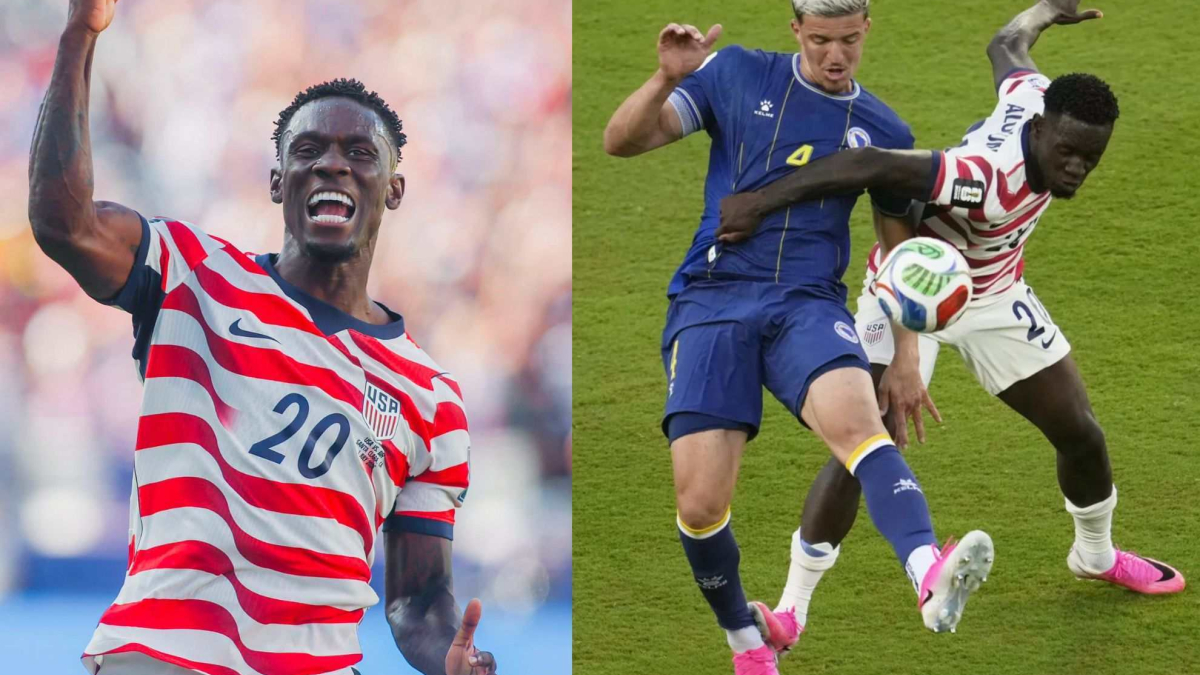
The controversy surrounding Folarin Balogun's red card at the 2026 FIFA World Cup continues to generate debate, with a senior White House official now defending the U.S. government's unprecedented involvement in the disciplinary process.Andrew Giuliani, who leads the White House's World Cup task force, argued that the United States had every right to question Balogun's suspension before the USMNT's Round of 16 match against Belgium, pointing to concerns over the officiating process and referee Raphael Claus' history.The comments come after FIFA made the surprising decision to overturn Balogun's one-match suspension despite initially confirming the striker would be unavailable for the knockout match. That reversal, reportedly made after intervention from President Donald Trump and the White House, has become one of the tournament's most polarizing storylines.White House cites fairness and investmentSpeaking about the decision, Giuliani said the administration's actions were driven by concerns over fairness rather than favoritism. "We believe in a level playing field," the official said. He added that President Trump viewed the issue as one of competitive integrity, emphasizing that the United States had invested significant resources into hosting the World Cup and wanted assurances that the tournament would be administered fairly."We want to make sure that America, especially when you consider all the federal dollars that we laid out for this, all of the years of preparation that went into this, the vision, going back to 2018, that we can ensure at least it was going to be fairly administered on the pitch," Giuliani said.The White House's argument centered on the belief that questioning a controversial decision did not undermine the competition but instead sought to protect its integrity.Why Raphael Claus became part of the debateAccording to Giuliani, much of the concern surrounded Brazilian referee Raphael Claus, who issued Balogun's red card after being instructed by the Video Assistant Referee to review the incident on the pitchside monitor. Claus initially allowed play to continue before changing his decision following the VAR recommendation.Giuliani argued that the sequence raised concerns because of Claus' previous scrutiny in Brazil. In 2024, the referee was investigated by the Brazilian Football Confederation after Botafogo owner John Textor accused him of manipulating matches through questionable officiating decisions, including controversial red cards.The investigation ultimately cleared Claus of any wrongdoing.Nevertheless, Giuliani said the prior investigation, combined with the circumstances surrounding Balogun's dismissal, justified additional scrutiny. "We found it highly suspicious that there was a referee who had been investigated for match fixing previously, and specifically for irregular red cards, issuing irregular red cards," Giuliani said.He also questioned whether VAR protocol had been properly applied, arguing that slow-motion replay was allegedly used in evaluating what he described as a contact foul, an interpretation he claimed violated the intended review process.FIFA stands by its officialsThe controversy has reignited broader discussions about officiating during the World Cup. FIFA has repeatedly rejected accusations that its referees operate with bias or outside influence. Those comments came after Egypt head coach Hossam Hassan alleged earlier in the tournament that Argentina and Lionel Messi were receiving favorable treatment because of their commercial value following Argentina's dramatic comeback victory over Egypt.FIFA's refereeing chief, Pierluigi Collina, forcefully defended the integrity of match officials. "No one can question the integrity of the FIFA World Cup match officials," Collina said. He warned that repeated accusations against referees can lead to threats directed not only at officials but also at their families.



Most Popular