
The tee debate at the heart of rugby placekicking

When Leinster played Ulster in Belfast last month, something was new in Sam Prendergast’s kicking routine.He changed his tee and by doing so, broke with a strong tradition in Irish placekicking. It’s not quite Dylan going electric, but Prendergast moved away from a style similar to that of a line of Ireland kickers: Ronan O’Gara, Johnny Sexton and more recently Jack Crowley.Think of a pronged kicking tee, one that places the ball low to the ground and in a reasonably upright position. You’re probably picturing the old green Gilbert. That style has been the dominant choice.Against Ulster, Prendergast used a telescopic tee, one that elevates the ball off the ground with a forward tilt. He’s not the first Irishman to use it – see Ian Madigan and John Cooney.Why did he change? Well, that opens up a can of worms, a wider debate within the world of kicking.Against Ulster, Prendergast used a tee made by RugbyBricks, a New Zealand-based brand. Peter Breen, the founder, first heard from Prendergast when he was still at school. He explains what he sees as the advantage of moving from an upright to an elevated tee. Like many, Breen turns to golf (rugby players really, really like golf).“The first benefit is by elevating the ball and leaning forward, it creates less spin,” explains Breen. “Do you play golf? With your driver, if you’re getting high spin, the ball’s going nowhere. With those kickers that have tried the low tees, when they have their shockers, it’s rotating so fast and falls out of the air so fast, exactly the same as golf.“When you lean that forward and elevate it, your foot is more at the back of the ball, so you’re getting more of the laces, a punt strike on that inside of the foot. You’re getting a nicer, slower rotation, your misses are grazing uprights rather than ugly duck hooks or slices.”Gareth Steenson, the former Exeter outhalf, is the current Ireland women’s kicking coach. He used an elevated ball but with less tilt. “If you play golf, if you want more distance you take the driver out and tee it up a bit,” he says. “It’s because of the elevated height of the ball.”Ross Byrne used a pronged Gilbert tee before moving to a telescopic one, lifting the ball off the ground. “One of the reasons I changed was power,” he says. “I had to dig the ball out, it was putting a bit of strain on my groin and my quad when the ball was lower to the ground.”In theory, swapping tee mid-season is a drastic move given the way you strike the ball has now changed. “Completely different,” agrees Breen. “The lower the tee gets, the lower your foot gets side on. The way to visually think about it is if you’re doing a push pass along the ground with the soccer ball, it’s a very pushy, instep part of your foot. The higher the tee, the more out the back of the ball you get with your laces strike. Like a volley in football.”Byrne, for what it’s worth, saw his elevation of the ball as much of a muchness. “I just changed the week before the game. It wasn’t a big thing. I wouldn’t do it if I was worried about looking at a tee in the game and thinking it was weird.”On the other side of this debate is one of the world’s better known kicking coaches, Dave Alred. He has worked with Jonny Wilkinson, O’Gara, Sexton and Crowley, kickers who all used a lower tee. Alred sells his own version with Rhino. He also points to injury and consistency concerns when explaining his preference.“Look at young kids on social media, it’s all about kicking it a long way,” says Alred. “They wreck their bodies. There’s no mechanical efficiency about what they do, they smash it. If it goes over one in 10, it’s like the amateur golfer, that one shot makes you come back.“If you can get the impact on the ball as near as possible to under your centre of gravity, you will be able to use your body weight as a power source. There’s less reliance on your leg. You usually find that the ones that are the most consistent have the centre of gravity under their naval.“The lower the tee, the easier it is to hit it under your body weight. If the tee is high, you’ve already passed the lowest point and are on the way up. If you look at Sexton, he was brilliant at getting his body weight over the ball.”[ Conor Murray: Leinster Rugby deserves more than social media cynicismOpens in new window ]Alred also notes the point of contact. He believes that by striking the belly of the ball, rather than towards the pointed end, the margin for error is smaller.Other sports can be an influence, not just golf. In soccer, and to a certain extent Gaelic football, players are more used to a lower sweet spot – the ball is on the ground after all. Steenson works with current Ireland kicker Dannah O’Brien who uses an upright, low tee.“If you look at Dannah, she’s back to the tee she started with,” says Steenson. “When we went to the World Cup last year, she changed to a higher one. Now, she feels it gets more purchase with a slightly lower tee. She’s got the Gaelic background, she likes to feel the ball lower on her foot.”Kicking is one of the few parts of rugby that has some sort of cultural cut-through. Anyone who kicks a ball in anger at some point copies Wilkinson’s cupped hands. Same for tees.Steenson mimicked Wilkinson and David Humphreys, his fellow Ulsterman. One former international points to O’Gara as inspiration. Now, plenty of young kickers see RugbyBricks tees on Instagram.When they get to the pros, things can change depending on coaches, kicking styles and personal experimentation. Prendergast first used an elevated tee at under-20s level before moving to the upright prongs. Now he’s using a high tee again.Towards the start of his career Crowley kicked a higher, tilted ball. Now he’s on the lower tee.Even Sexton, for so long a proponent of the upright, low option, was pictured using a telescopic tee in the early days.“Some of it would be just messing around after training,” says Ross Byrne of kicking’s sharing culture. “You might just put the ball on one of the lads’ tees and kick it, ‘Oh, that felt nice.’”Clearly, this part of the game is awash with different opinion. There is, though, somewhat of a consensus on the value of mixing things up. “It keeps the brain fresh, stops you making assumptions,” says Alred.“The biggest thing is everyone’s different, everyone finds out what works for them,” explains Steenson. “What makes me feel good?“How many golfers swing the golf club the same way? There are different outcomes and equipment, but they’re all scratch golfers.“With kicking, there’s no right or wrong way.”

Most Popular




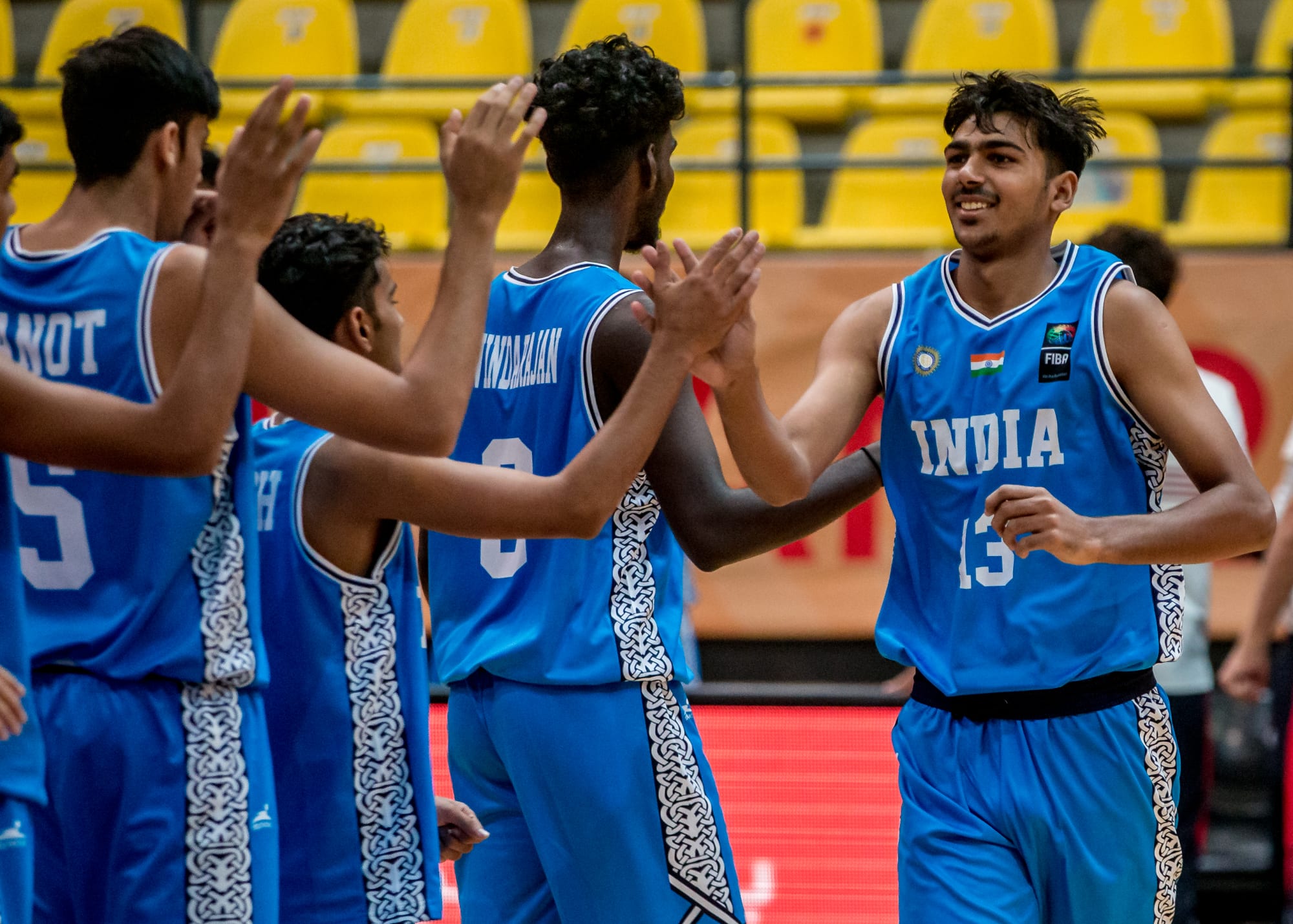
India to host FIBA U18 Asia Cup 2026
4 hours ago