
When Tuchel and Deschamps forgot 'The Art of War'
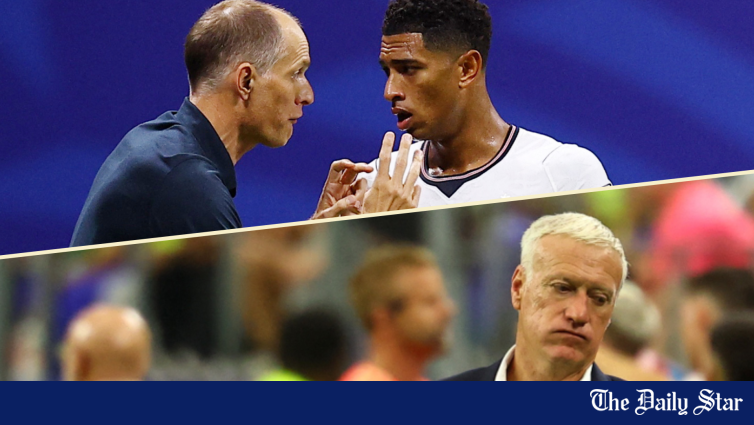
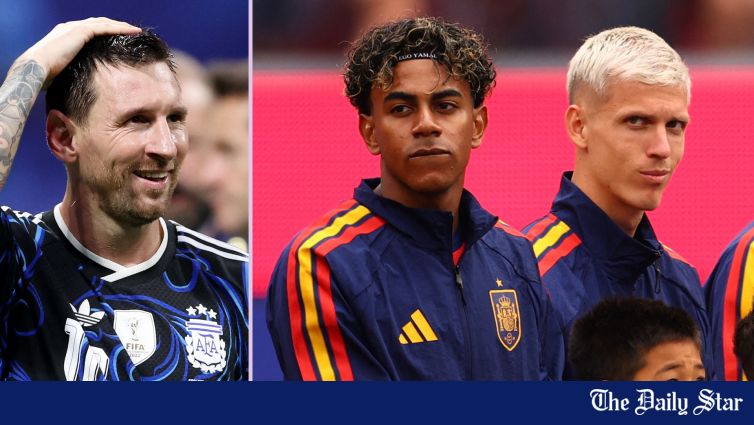
"If you know the enemy and know yourself, you need not fear the result of a hundred battles. If you know yourself but not the enemy, for every victory gained you will also suffer a defeat."Sun Tzu’s ancient wisdom from The Art of War fell on deaf ears in the penultimate hurdles of the 2026 World Cup.It appears the coaches of the losing semifinalists, England’s Thomas Tuchel and France’s Didier Deschamps, were guilty of underestimating their oppositions’ strengths while being overconfident of what had worked for them in the tournament.First comes Tuchel. England arrived in the last four battle-hardened after tense knockout wins, looking ready to go all the way with Harry Kane and Jude Bellingham in prolific form.The Three Lions fancied themselves against the defending champions, Argentina. Lionel Scaloni’s men, though, had navigated a relatively chaotic route, their defensive lapses making them look like a ticking time bomb despite Lionel Messi continuing to produce the goods.On the night, a different Argentina showed up -- less composure and way more aggression, a version seen in grueling South American qualifiers. Messi and teammates went all guns blazing from the kickoff, forcing England to answer questions from outside the syllabus.But England got the goal. Anthony Gordon scored in the 55th minute, giving them a crucial advantage.What happened next, however, defied common sense, ending up being a blessing in disguise for the defending champions. Instead of riding the wave of momentum, England retreated to a shell and ended up parking the jet that sends them home.Seeing England bring on Ezri Konsa to switch to five defenders, Scaloni swapped left-back Tagliafico for left-forward Nico Gonzalez to stretch the pitch.The attack came in waves; Enzo Fernandez equalised five minutes before regular time, and a 92nd-minute Lautaro Martinez header inevitably relieved a characterless England of their misery.Now comes Deschamps. The 2018 champions and 2022 runners-up France were on a marauding run, but Deschamps was too confident of his own strengths, sticking to the same starting lineup and modus operandi; and one couldn’t blame him.Against Spain in the semifinals, France had the paper advantage, but the crucial question was whether Spain's pass masters could exploit the chink in the French armor: a lack of ball-playing midfielders.Spain featured their usual three-man midfield, including the rock-solid Rodri, and France’s two-midfield system in a 4-2-4 was completely overrun.Turns out, Spain brought their A-game, and France had no Plan B. Rodri and Co dictated the tempo, isolating Kylian Mbappe and Ousmane Dembele, making French players dance to their tunes in a 2-0 Spanish victory.Deschamps blamed the refereeing and Tuchel claimed his team "played their best game" -- both managers paying the ultimate price for trusting blindly in their teams’ abilities.Deschamps was entirely convinced that his star-studded roster could simply execute their way past any tactical obstacle, completely ignoring how a peak Spain could exploit his under-manned midfield.Tuchel, similarly, trusted his defensive block to blindly absorb pressure, assuming his highly curated ensemble could hold the fort for a third time -- after doing it successfully against Mexico and Norway -- without adjusting to Scaloni's aggressive tactical tweaks.The game of football often unfolds in mysterious ways. Had France and England emerged as finalists, the narrative could have been about their players living up to the billing. But it is not. Instead, credit goes to Spain and Argentina, who found the optimum balance between what could be done and what needs to be done.Ultimately, wishful thinking can only get one this far. Let this and Sun Tzu’s words be a reminder for future title aspirants.

Most Popular


Star Cat to undergo surgery
2 hours ago

Football fans eager to catch final showdown
2 hours ago
